

The initial recovery period after an eyelid surgery, medically referred to as blepharoplasty, is crucial for promoting proper healing and minimizing potential complications. One of the necessary rules for successful recovery is to avoid watching television. But why can’t you watch TV after blepharoplasty? In this article, we address this question and discuss other blepharoplasty recovery guidelines.
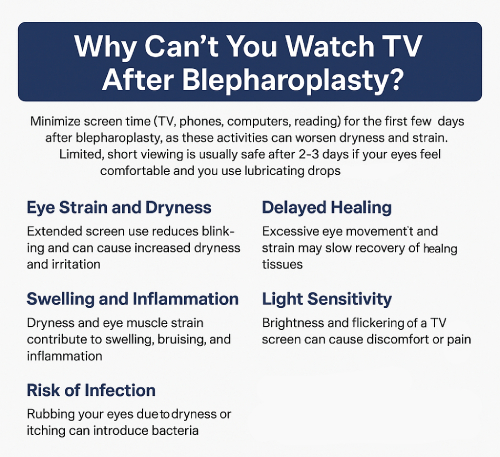
Why Can’t You Watch TV After Blepharoplasty?
Most surgeons recommend that patients avoid watching TV for at least 5 days after blepharoplasty. Several negative consequences can occur if you watch TV after blepharoplasty and hinder the recovery process:
Eye Strain and Dryness
When we concentrate on a screen, we tend to blink less frequently. As a result, the eyes become drier. Since dry eyes are a common temporary side effect of blepharoplasty (the surgery temporarily disrupts tear film production and eyelid function), watching TV will exacerbate the condition. This, in turn, will lead to irritation and discomfort.
Swelling and Inflammation
Irritation caused by dryness and eye muscle strain can lead to swelling, bruising, and inflammation of the eyes.
Delayed Healing
Like any other body part and organ, the eyes and the muscles around them require rest to recover after an invasive surgical procedure. As mentioned, watching TV can strain the eyes and surrounding muscles. Excessive eye movement or strain may even put stress on healing tissues, delaying full recovery.
Light Sensitivity
Light sensitivity is a common temporary side effect of blepharoplasty. The brightness and flickering of a television screen can cause discomfort or even pain until your eyes are completely healed. Additionally, watching TV can result in headaches and fatigue.
Risk of Infection
The symptoms we mentioned above—dryness, irritation, and discomfort—can lead to you touching or rubbing your eyes. Even if you avoid doing it consciously, it can happen when you are asleep or distracted. Touching or rubbing your eyes can introduce bacteria to the surgical site, potentially causing infections. Allowing your eyes proper rest reduces the urge to touch them and helps maintain a cleaner, safer healing environment.
What Are Other Rules for Successful Blepharoplasty Recovery?
Successful blepharoplasty recovery requires more than just avoiding TV. To ensure optimal healing, minimize complications, and achieve the best cosmetic results, we recommend you follow these key rules:
- Follow your doctor’s instructions closely for post-surgery care. You might be prescribed specific medications, antibiotic ointments, or lubricating drops and given recommendations on how to care for your incisions. Also, do not skip the follow-up appointments with your surgeon.
- Keep your head elevated when resting for 5-7 days. You can use additional pillows or sleep in a half-seated position in a reclining chair.
- Always sleep on your back to avoid the pillows and the surface of the bed touching your face. You can try using an airplane neck pillow or place pillows on both sides of your head to keep your head in the same position while you sleep.
- Avoid sports, heavy lifting, bending, vigorous exercise, or any activity that increases blood pressure for at least two weeks. These activities increase blood flow to the surgery site and interrupt healing.
- Shield your eyes from the sun and wind with glasses and a wide-brimmed hat when going outside.
- Do not wear any eye makeup for at least 2 weeks after the surgery.
- Abstain from smoking and drinking alcohol, as they significantly slow down healing.
- Get plenty of rest and sleep, and maintain a nutritious diet that promotes faster regeneration.
Blepharoplasty at Advanced Eye Medical
Do not hesitate to schedule an appointment with an experienced eye surgeon at Advanced Eye Medical. In our clinic, our priority is to perform safe procedures that deliver noticeable results with minimum side effects.