
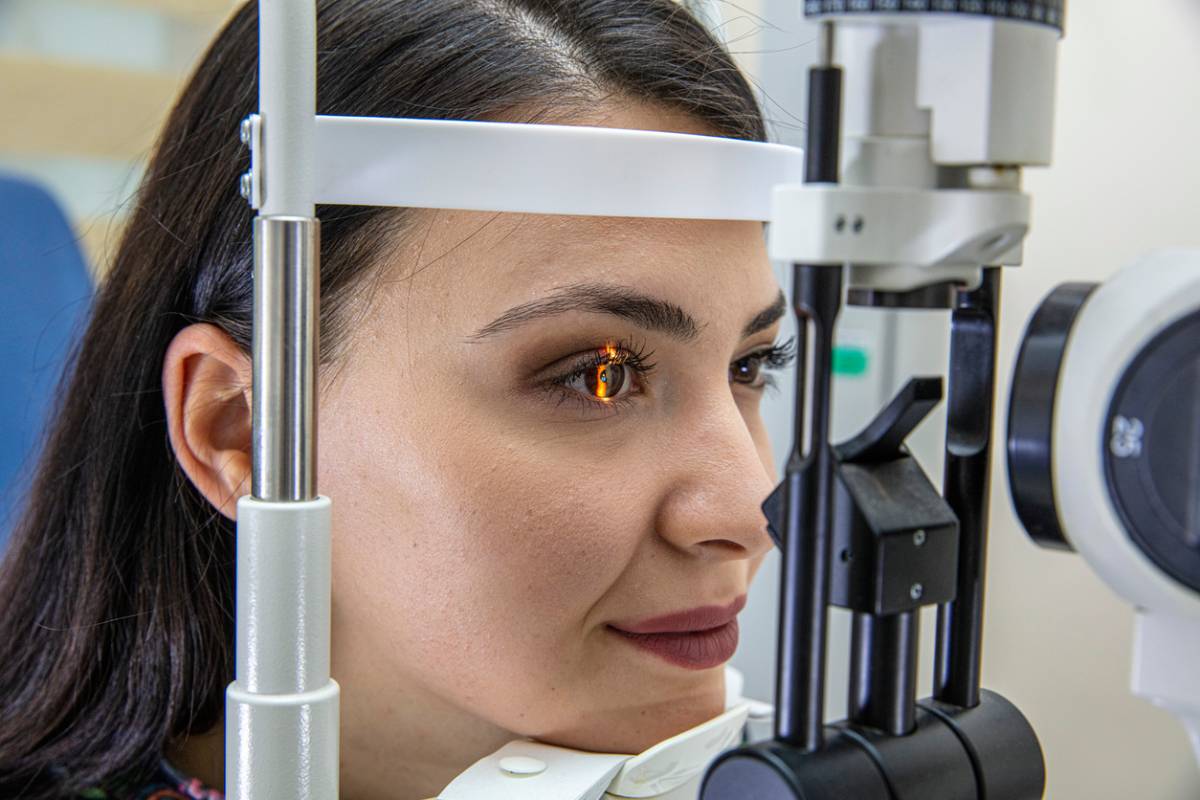
Have you been thinking of correcting your vision? If you have, then you have probably heard of LASIK and maybe even LASIK iDesign. These are popular eye procedures that help patients get clear vision without the help of glasses or contact lenses. But they are not the same. Known for its excellent results, traditional LASIK has been around for a much longer time than LASIK iDesign. The latter is the next generation of laser vision correction. But what is the difference between LASIK and LASIK iDesign? Knowing the differences between the two will help you identify which one could be right for you. Ultimately, an eye surgeon can determine the best option for your specific vision needs.
What Is the Difference Between LASIK and LASIK iDesign?
What Is LASIK?
Laser Assisted In Situ Keratomileusis (LASIK) is a procedure that reshapes the cornea, which is the clear, dome-shaped surface at the front of the eye, as a corrective measure for refractive errors such as nearsightedness, farsightedness, and astigmatism. During LASIK, the eye surgeon uses a femtosecond laser or a microkeratome blade to create a thin flap in the cornea, and the underlying corneal tissue is then reshaped with an excimer laser to improve how light is focused into the retina. The flap is placed back into position when the reshaping is complete. No stitches are necessary as the flap naturally adheres to the tissue.
Traditional LASIK offers patients minimal discomfort, a quick recovery time, and excellent results. Most patients also report improved vision within 24 hours and are able to return to work the next day. However, visual imperfections like glares or halos at night may still be experienced by some patients.
What Is LASIK iDesign?
This is an advanced or improved version of the traditional LASIK procedure with next-level customization. Eye surgeons create a detailed “fingerprint” of the patient’s eye using wavefront-guided technology combined with a high-definition 3D mapping system.
Because the iDesign system can capture 1,200 measurements of the eye’s surface and curvature, your eye surgeon can plan a fully customized laser treatment for you. Just like your fingerprints, your eyes are also unique. The iDesign technology has the power to map even the smallest variations in the cornea and optics of the eyes that traditional LASIK may not be able to detect. Because iDesign can get ultra-precise data, it can correct not just the standard refractive errors but also subtle imperfections.
Key Differences Between LASIK and LASIK iDesign
-
Level of Customization:
Although traditional LASIK is already highly effective, LASIK iDesign takes customization even further. Each eye is measured in minute detail. This allows treatments to be fully tailored to your visual profile.
-
Precision of Mapping:
iDesign uses wavefront analysis and corneal topography to produce a 3D image of the entire eye. In contrast, traditional LASIK, although accurate, relies on simpler measurements that may not detect subtle optical imperfections.
-
Accuracy and Visual Outcomes:
LASIK iDesign often offers sharper vision and better night vision to patients in comparison to traditional LASIK. Some patients even achieve 20/20 vision after iDesign.
-
Candidacy:
Some patients who have irregular corneas or certain visual distortions may not be ideal candidates for traditional LASIK but may benefit from iDesign. However, they still have to be examined by a qualified eye surgeon to determine if they are good candidates.
Schedule an Eye Examination Today
Both procedures can result in dramatic improvements in your vision and reduce your dependence on corrective lenses. The choice between LASIK and LASIK iDesign will depend on the unique characteristics of your eyes, your lifestyle, and your budget.
If you want the most advanced and customized laser surgery that your money can afford, then it will be wise to invest in the iDesign Laser Eye Procedure. On the other hand, traditional LASIK has a proven track record of safety and success. It remains an excellent option for you. Schedule an appointment with us today so our eye surgeon can determine which of the two procedures will be best for your unique eye condition.