

Astigmatism is a condition in which a person’s cornea is not perfectly round. This non-circular shape affects how light enters the eye and causes blurred vision. It is a common condition that impacts one in three people. Generally, these people have regular astigmatism, which can be addressed with glasses, contact lenses, or minor procedures. Others, however, have irregular astigmatism, which is a more complex form of the condition. When a person has irregular astigmatism, the cornea has an uneven shape that cannot be fully addressed with glasses or contact lenses. This leads many to the question, “How do you treat irregular astigmatism?” We answer this question below and provide more information about irregular astigmatism.
How Do You Treat Irregular Astigmatism?
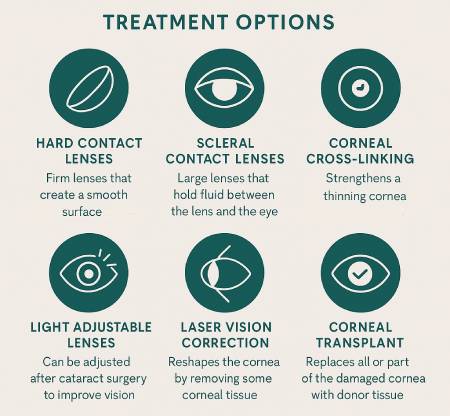
There are several treatment options for irregular astigmatism. From light-adjustable lenses to laser vision correction, there are several effective options. The type of treatment depends on the cause of the astigmatism, the shape of the cornea, and the severity of the vision issues. Below are some of the most common treatment options for irregular astigmatism.
Hard Contact Lenses
One of the most widely used treatment options for irregular astigmatism is hard contact lenses. These contact lenses are also referred to as rigid gas-permeable lenses. They are made from firm materials and hold their shape when placed on the eye. Unlike soft contact lenses, hard lenses create a smooth surface over the cornea. This feature helps correct the uneven shape of the cornea and improve vision. Hard contact lenses can take some time to get used to.
Scleral Contact Lenses
Scleral contact lenses are another type of hard contact lens. Unlike standard rigid gas-permeable lenses, scleral lenses are much larger. Their surface area extends to the white part of the eye rather than just the cornea. Patients often report that these lenses are much more comfortable than standard hard contact lenses. Scleral lenses operate by creating a smooth surface over the cornea, thereby providing a more stable fit. They hold a layer of fluid between the lens and the eye. For those with irregular astigmatism, this results in less irritation and improved vision.
Corneal Cross-Linking
If irregular astigmatism is caused by corneal thinning, corneal cross-linking may be the best course of action. The procedure strengthens the cornea and prevents it from becoming more uneven over time. Corneal cross-linking uses special eye drops and UV light to stiffen the cornea. It is important to note that this procedure does not reverse astigmatism. However, it can prevent it from getting worse and reduce the risk of further vision loss.
Light Adjustable Lenses
For patients with irregular astigmatism and cataracts, light-adjustable lenses may be a helpful treatment option. Light-adjustable lenses are implanted during cataract surgery to replace the natural lens of the eye. One of the major benefits of light-adjustable lenses is that they can be adjusted after surgery with a special UV light. Specifically, the results can be fine-tuned to improve vision and the overall outcome.
Laser Vision Correction
Laser procedures, such as LASIK or PRK, can help improve irregular astigmatism. Which procedure you undergo will depend on the patient’s unique needs. Each of these surgeries reshapes the cornea and evens it out to improve vision in those with irregular astigmatism. Though the treatment has many benefits, it is not right for everyone with the condition. Specifically, patients with severe corneal thinning or scarring are not good candidates. Talk with a skilled and experienced eye surgeon to determine if this treatment option is for you.
Corneal Transplant
For severe cases of irregular astigmatism, a corneal transplant may be necessary. Advanced cases include patients with misshapen or severely damaged corneas. The surgery involves replacing all or part of the damaged cornea with healthy donor tissue. Corneal transplant surgery is often an option of last resort after other treatment options have failed. The recovery process can take a few months, but patients typically report significantly clearer vision after they have fully healed.
Common Symptoms of Irregular Astigmatism
Irregular astigmatism can cause several vision issues. These signs can range from mild to severe and affect both near and far vision. If you notice any of the following symptoms, consult with an eye surgeon right away.
Blurred or Distorted Vision
One of the common signs of irregular astigmatism is blurred vision. Your vision may be stretched or uneven.
Double Vision
If you experience double vision, even when using only one eye, it may be a sign of irregular astigmatism. This is caused by the irregular shape of the cornea, which bends the light unevenly.
Glares or Halos
A common symptom of irregular astigmatism is glare or halos. These are very common at night, which can make driving difficult. Headlights, streetlights, and signs may look blurry or have streaks around them.
Eye Surgeon
If you are concerned that you may have irregular astigmatism, contact the team at Advanced Eye Medical today to schedule an appointment!