
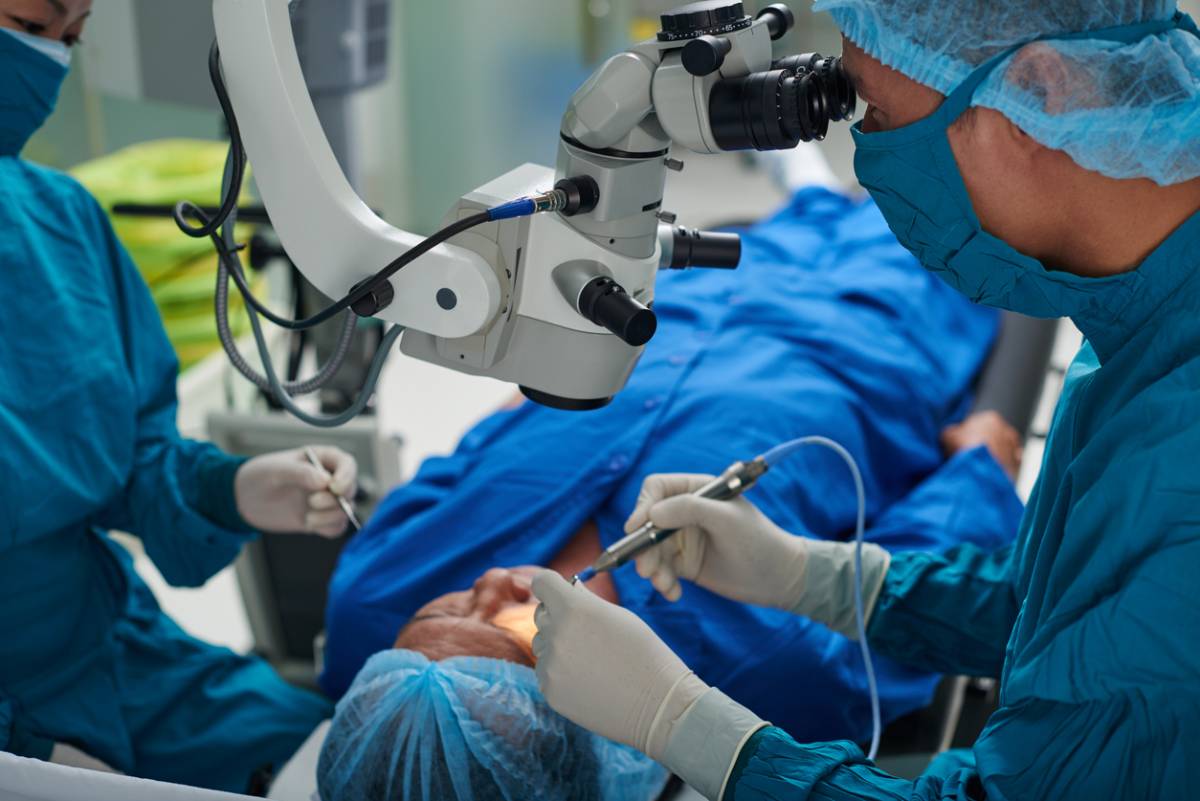
After cataract surgery, many patients are amazed at the results. Colors seem brighter, shapes are clearer, and your eyes have less strain. For many, the procedure serves as a life-changing experience. Still, our patients wonder: Are you awake during cataract surgery? And if so, what is it like?
Are You Awake During Cataract Surgery?
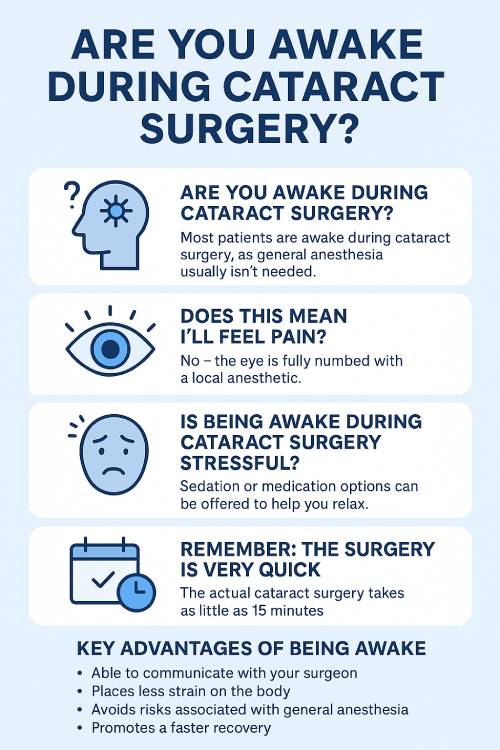
Many surgical procedures require general anesthesia. This type of anesthesia renders the patient fully unconscious. However, patients are typically awake during cataract surgery. Keeping you awake during cataract surgery provides multiple benefits, making it the preferred method.
Does This Mean I Will Feel Pain?
Not at all! Modern local anesthetics are more than sufficient for facilitating a pain-free procedure. You need nothing more than a few precise injections.
The local anesthetic fully numbs the treatment area. In other words, the nerves will not send pain signals to the brain.
However, keep in mind:
- You may feel a small pinching sensation during the injection itself. A topical numbing cream is used first, making the injection easier to tolerate.
- You may still feel sensations like pressure during surgery. However, these should never approach a sensation of pain.
Is Being Awake During Cataract Surgery Stressful?
The main concern patients have is that being awake during surgery feels stressful. However, it depends on the individual. Frankly, knowing that someone is operating on your eyes is rarely the most comforting of feelings.
We do offer means of combating anxiety during surgery. Some patients may benefit from taking an anxiety-reducing medication ahead of surgery. Others may find that reducing stress is best achieved through light sedation.
Remember: The Surgery Is Very Quick
We agree that staying awake for an hours-long surgery would prove stressful. Fortunately, cataract surgery is much shorter than many people realize.
While your visit can take between 1 and 2 hours, the actual surgery part is only about 15 minutes.
Once patients are aware of this, many find the idea of awake surgery more tolerable.
You may feel mild discomfort after the anesthesia wears off. However, it should quickly resolve. At most, many patients only feel a mild itching or gritty sensation in the eye.
Can I Have General Anesthesia If I Want It?
Some providers do offer full sedation for cataract surgery. Usually, surgeons reserve this option for patients who would be overwhelmed by stress during surgery. You go unconscious, and then the surgery is complete by the time you wake up.
However, qualifying for general anesthesia comes with some requirements. Considerations include:
- Knowing that it typically increases the price of surgery. Costs will include fees for the board-certified anesthesiologist.
- Having no conditions that are contraindications. For example, certain heart or lung conditions, as well as conditions like obesity, can increase your risk.
- Being prepared for additional preoperative assessments to ensure safety.
Key Advantages of Being Awake During Cataract Surgery
Able to Communicate with Your Surgeon
When awake, you can interact with your surgeon during the procedure. This ability to interact improves the surgery. You can follow certain helpful instructions. Or your surgeon can respond to your needs.
Places Less Strain on the Body
General anesthesia places notable strain on the body, particularly the heart and lungs. It can take hours to fully wear off.
Local anesthetics, on the other hand, wear off rapidly and place minimal strain on the body. It simply dampens the nerves’ responses to pain stimuli.
Avoids Risks Associated with General Anesthesia
A surgeon will examine your medical history before moving forward with general anesthesia. However, it can still carry some risk. Although the risk of adverse reactions remains low, it is not entirely nonexistent.
Your surgeon should take the time to fully inform you about these risks. From there, you can make an informed decision.
Promotes a Faster Recovery
Your body can focus solely on healing after a local anesthetic. General anesthetics can slow the healing process. With a procedure as brief as cataract surgery, however, this difference tends to be minimal.
Reduced Need for Preoperative Assessments
You will need additional tests before having general anesthesia. For example, you may need:
- Blood work (complete blood panel)
- Urinalysis
- Chest X-rays
These tests require additional time and money, further increasing the procedure’s cost. Remember, the procedure is only about 15 minutes. However, getting these tests done can add hours to the overall process.
Start Toward Clearer Vision Today
Contact Advanced Eye Medical to learn more about cataract surgery with a leading eye surgeon. From LASIK to eyelid surgery and beyond, we are a leading provider of eye care in Southern California, and we are happy to offer you our expert services.